Sir Percivale
Le Morte d'ArthurSir Percivale is one of the Round Table’s maiden knights, a figure whose significance becomes clearest when worldly prowess gives way to the spiritual tests of the Holy Grail. He joins Arthur’s fellowship, seeks counsel about the quest, travels among its marvels with Galahad and Bors, and reaches its sacred culmination. The book’s larger account sets his achievement against the failures of even its most celebrated earthly knights, while distinguishing his end from the return to court of Bors, the fellowship’s forgiven but imperfect survivor.
Identity and Introduction
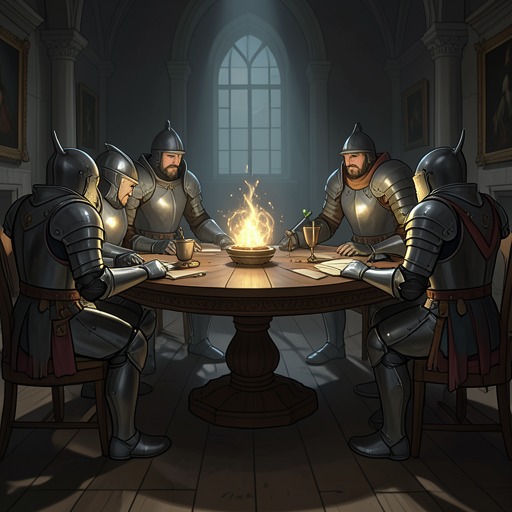
The account of Percivale’s arrival at court is framed as a passage into Arthur’s fellowship: he is made a knight by Arthur, while a dumb maiden speaks and brings him to the Round Table. This introduction links his personal entry into knighthood with the communal institution he will later leave behind to undertake the Grail Quest. The table is not merely a place of honour; in Merlin’s account, it represents the world, and the knights destined to achieve the Sangreal are to be recognized by a different standard.
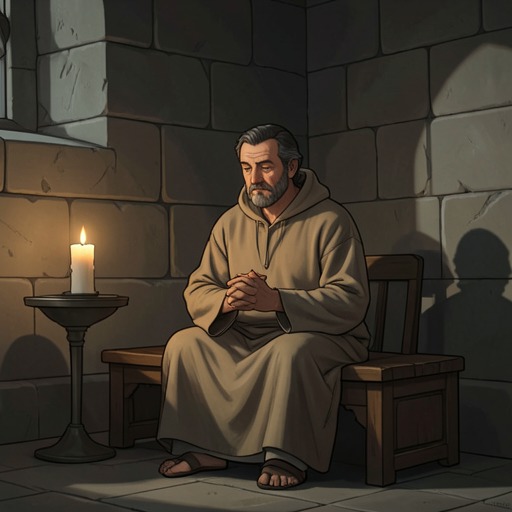
Before the quest is fully under way, Percivale encounters a recluse who gives him counsel and reveals that she is his aunt. The episode places instruction and kinship at the beginning of his spiritual journey: he seeks guidance rather than relying only on the self-confidence that had served knights in worldly combat. Elsewhere in the quest narrative, he enters a monastery and encounters the aged King Evelake, another meeting that situates his travels among religious houses and the long memory of sacred history.
From Round Table to Grail Quest
The book distinguishes the knights’ earlier identity as earthly warriors and lovers from the demands of the Grail. When the Holy Grail comes to Arthur’s fellowship, every knight enters the quest, but the confidence that had served them in battle cannot guarantee success. The quest tests them by standards that Sir Percivale, Sir Launcelot, Ector de Maris, Sir Gawaine, and the other foremost members of the fellowship do not all meet. Percivale’s importance lies in being among the holy knights who do achieve it, not merely in his membership among the famous company.
His adventures give this distinction a narrative shape. In the waste forest, Percivale travels with Galahad and his sister and encounters an extraordinary vision involving a hart and four lions. The company is also confronted with a strange custom that they refuse to obey, and they fight those who oppose them. These episodes combine the physical demands of the wandering quest with encounters that test how the knights respond to unfamiliar claims and obligations; the journey is not simply a sequence of victories in the usual tournament world.
Companions and Sacred Encounters
Percivale’s sister has a central place in the quest’s movement from trial to sacrifice. At a castle, she gives a dish full of her blood in an attempt to heal a sick lady, and dies as a consequence; her body is then placed in a ship. Percivale’s quest therefore includes not only his own spiritual testing but a loss within his closest travelling company. The story treats her act as a decisive cost of the Grail adventure, not as a victory in the ordinary terms of knightly reputation.
Percivale later meets Sir Bors and Sir Galahad, and the three come to Carbonek. There, their fellowship reaches its sacred culmination: they are fed by the Holy Sangreal, and the Lord appears to them. The account of this vision includes Joseph the first bishop of Christendom, borne by four angels to the table of silver where the vessel rests. A bleeding spear, candles, and a towel are brought into the scene; the sacred rite then makes the mystery of the vessel visible to the knights. The encounter belongs to a different order from the contests that first established their fame: Percivale witnesses the Grail not as a prize won by force but as the centre of a religious revelation.
The Grail’s background reinforces that change in register. The explanatory account traces the vessel through competing descriptions—as dish, cup, or vessel—and explains its Christian association with the Last Supper and Joseph of Arimathea, who receives the Saviour’s blood and brings the vessel to England. The quest thus joins Percivale’s adventures to a sacred history that the narrative presents as larger than the Round Table’s worldly achievements.
Achievement, Death, and Significance
The book’s account of the quest makes Percivale’s achievement part of a larger separation between earthly and spiritual chivalry. The holy knights complete the quest; two depart from life to a higher one, while Sir Bors, though not entirely spotless, is forgiven and sanctified. Bors returns to help restore the feasts and tournaments at Camelot and Westminster, acting as a link between the earthly fellowship and the spiritual world. Percivale’s fate is different: after the death of Galahad, Percivale and Bors mourn, and Percivale himself dies. His ending belongs to the departure of the quest’s successful knights rather than to the restoration of courtly life.
The book’s moral assessment places Sir Percivale alongside Sir Galahad as an ideal of maidenly holiness, in contrast to the lawless love whose consequences shape the larger tragedy. That contrast does not make his story a rejection of all earthly knighthood: he begins within Arthur’s fellowship and undertakes the same quest as the other knights. Instead, his trajectory reveals the limits of the fellowship’s former standards. Courage and worldly honour can bring a knight to the threshold, but the Grail requires spiritual fitness; Percivale’s achievement and death make that distinction central to the book’s design.